Late January is the time when editors and publishers come back from holidays, like the rest of Australia. It's a time of excitement for some, with phone calls and contracts. For me the year began with two rejections.
I emailed a friend and her reply was sympathetic. She's a single mum with two kids and she has just joined an on line dating agency. Of the fifteen 'nuffies' sent to her, the only one she was interested rejected her before they had a meeting. Her take on it was, rejection sucks no matter what form it takes.
I guess I know I've progressed somewhat up the writing ladder. I submitted to my UK publisher and received an email rejection in a couple of days. In between time, I went camping with the family. I sat under the shade , with my feet in a river, drinking a cold beer and dreamt of my next book. It's like the time between buying a lotto ticket and when the numbers are drawn.
When I first began submitting to publishers, the wait could be as long as 9 months, which was a very long time to wait. Because of this long wait, writers who are just starting out often ask the question about multiple submissions. You'll get lots of different answers. I started out being a little indiscriminate about submitting and submitted to many at a time, anticipating rejection. I knew what those large white envelopes addressed to me, in my own handwriting meant when they were sitting in my mailbox. Sometimes I'd bring the envelope in and leave it on the bench and pour myself a large glass of wine before I could bring myself around to opening it.
Publishers get so many submissions, they can't give personal rejections to everyone and many are simply one line standard letters stating that your manuscript doesn't fit their list. My first submission was amateurish in the extreme, poorly written, with a cover letter which was an embarrassment. Thankfully, I received a nice rejection letter from Penguin, encouraging me to keep writing. Their rejection letters seemed varied ...it was only later when I heard one of their editors give a talk that I found out they have rejection letters from about A to K!
Still, I knew I was progressing, when my rejection letters began to sound like someone had actually read the book and evaluated it's potential. My Grandad Marches on Anzac Day was rejected by a number of publishers before it ended up with Lothian. It continues to be reprinted every year. I still have the rejection letters which said 'we only publish works which have commercial potential or literary merit' and the one which said ' we like your book, but it would only sell once a year.'
I comfort myself with thoughts like this when I have a rejection now. However, then I have to pick myself up, read the reasons for rejections and decide whether I can a) improve the manuscript, b) target it to a different publisher or d) put it in the bottom drawer.
My husband is a teacher and yesterday had a professional development session where apparently the topic came up about handling rejection. He piped up with, 'I know all about that, my wife's a writer.' He told them that this was a bad week as I'd had a rejection and he was asked how he handled it and supported it. In a way, existing in my own little vacuum of self pity, I didn't realise it affected him. I share rejection with my on line buddies, who I feel really know what that rejection letter or email feels like. But maybe my friend is right, rejection is the same no matter what form it takes and it sucks.
But tomorrow is a new day and I'm really liking writing about mad chickens at the moment. Until then, my daughter wants a new haircut, I need to tidy the house and decide whether I'm really going to start stripping the skirting boards in the hallway.
Friday, January 29, 2010


Thursday, January 28, 2010
Googleing On....
Further to my last post on the google settlement, I received an email from my UK publisher regarding their position on the google settlement. They will claim but make unavailable for display purposes. If an author disagrees, they can contact the publisher. By now, the time to opt out has passed, so those who have not actively done so will be deemed to have opted in.
The publisher recommended reading the following:
http://www.gillianspraggs.com/gbs/GBS_survival_aid.html.
Also the link to the presentation given by CAL is to be found at
http://www.copyright.com.au/Latest_News/Google_Book_Settlement_presentation_now_available.aspx
The publisher recommended reading the following:
http://www.gillianspraggs.com/gbs/GBS_survival_aid.html.
Also the link to the presentation given by CAL is to be found at
http://www.copyright.com.au/Latest_News/Google_Book_Settlement_presentation_now_available.aspx
Tuesday, January 19, 2010
CAL Google Settlement Seminar
With the deadline of 28th January looming to opt out of the Google Settlement, I thought I'd better attend the seminar in Melbourne run by CAL at the State Library, to see how it would affect me...if at all.
The seminar was run by Karen Pitt, general counsel for CAL and her powerpoint presentation will be available via the CAL website by the end of the week.
For those in the dark, Google announced in 2004 that it was going to digitise the holdings of major US research libraries, without the permission of the rightsholders ie publishers and authors. Funnily enough the rightsholders objected and started a class action.
There is now a settlement on the table, whereby Google agrees to pay a one off payment to those whose works were digitised prior to May 5 2009. This absolves them from all liability for past scanning. As to the future, it depends on whether your book is classified as commercially available...which is deemed as being offered for sale new by a seller anywhere in the world to a buyer in the US, Canada, the UK or Australia. If it is commercially available,the default position is that the work is out unless rightsholders opt in.
One of the most useful parts of the seminar was the question time.
So...my question as primarily a picture book writer was...how does this affect me.
Copyright for the text of a picture book is retained by the author while the copyright for the illustrations is retained by the illustrator. Therefore, both author and illustrator must agree to opt in/out. If one doesn't, the most restrictive ruling applies ie if my illustrator says no and I say yes, then the work is not included.
After the seminar my next step was to find out whether or not my works had been digitised. So that's where I am right now, with another tab open on my browser. Come with me if you like.
I've typed in www.googlebooksettlement.com
I've been here before but it was a long time ago. I've got the option of creating an account but I take a stab at what I might have put in as a user name and a password and I'm successful. I must be so predictable.
I'm told I can now manage my claimed books and inserts. I click on 'find and claim'
and then enter my name and publisher. Up pops a list of my books, including paperback and hardback versions. The most recent book isn't listed.
Notably, I'm told that none of my books were digitised prior to May 2009. I'm not surprised as I doubt my Australian picture books would be found in a major US research library. There are now other libraries which are participating in the library project including Oxford University, but no Australian libraries. So that means that I'm not entitled to the one off payment.
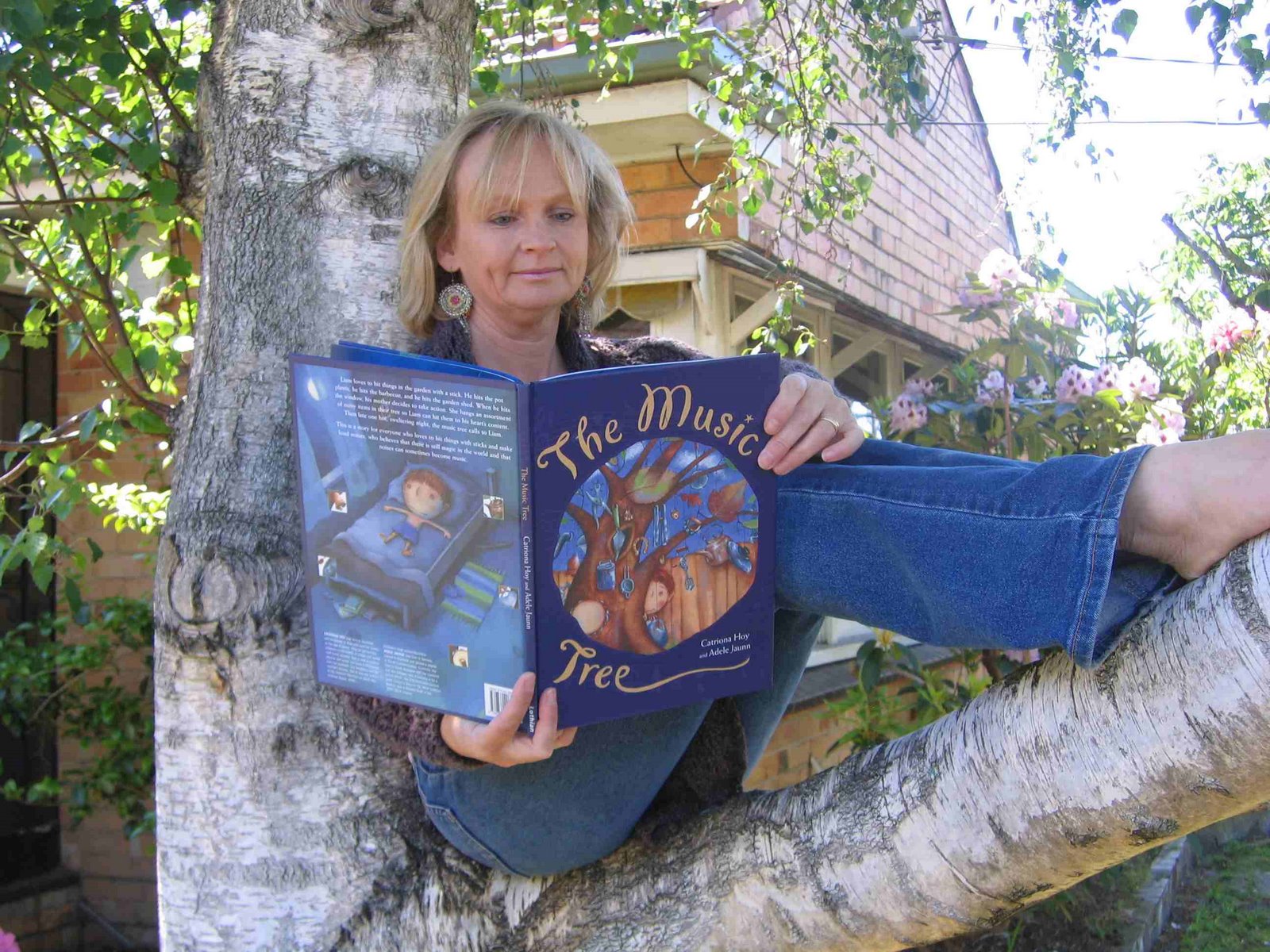
I am however surprised to see the listing of The Music Tree as not commercially available. Hmm, I know it is for sale in some places and I disagree with this. We were told at the seminar that if a rights holder asserts that a book is commercially available, Google will not display the book unless it is commercially available. Now I'm going to put that to the test.
I tick the boxes and claim all the books listed.
Now I am on the claim form.I click on 'assert rights' for The Music Tree and am asked whether the rights have reverted to me...which they haven't because frankly it's not out of print. This is getting complicated.
I click submit and claim and I'm back to the main claim form. I certify that the book was published in one of the countries listed. Now I click on Claim and it confirms that I have one book claimed and five pending.
Next, click on Manage claims and inserts. Hopefully now I'm at the stage where I can tell them it's commercially available. If I don't change this then Google will be able to make all display uses for my book, including print on demand and public display at libraries (no different from my book being in a library anyway but I don't get PLR)
http://www.googlebooksettlement.com/help/bin/answer.py?answer=118722&hl=en#commercial_availability
I click on the title of the book and come to the part where I can challenge the commercially available status. Interestingly on this page it states that I challenge that it is not commercially available in the US. This is possibly a throwback to the original settlement, whereas in the new settlement the definition has been widened. I'm asked to provide proof of my challenge. So I open yet another tab in the brower and go to amazon uk and find my book for sale. Sadly for my ego, it is reduced to £2.98. Strangely it lists the publisher as Orchard, not Lothian and the publication date as May 2008...did someone sell the rights overseas and not tell me??? I also go to Dymocks and find it at RRP with Dymocks on line. Hmm, if anyone wants a copy it's cheaper to have it shipped from the UK. How's that for book miles. I copy and paste these listings as proof that it is commercially available.
I now get to control the display uses. As the book was deemed not commercially available, Google has all the boxes ticked. I'm going to change them.
I tick Consumer Purchase, but specify a price of $US 28. I want to remove it from Public Access Service but this means I have to also remove it from Consumer Purchase, so I do so.
I select Preview, which means that it can be displayed as a marketing tool and I select the Fixed Preview option which means that only 10% of the book can be displayed. I also allow Snippet display, Front Matter display and Advertising.
There, I'm done.
For commercially available works, payment goes to the publisher and then flows on to the author via the agreement in the contract.
Apparently the ASA supports the ammended settlement saying that will 'provide income opportunities for authors of out-of- print books.
As the deadline for opting out approaches, I'm not going to opt out. As a picture book writer, I don't think the Google Settlement is going to affect me. My publisher is still the rightsholder for all my books. The advice at the seminar was to contact your publisher if you wished to discuss the status of your works. If the work is in print, both publisher and author must direct google and the process is initiated by the publisher. If the rights have reverted to the author it's a whole different ballgame.
Ahh, I hear children stirring, my time of peace is over. I must say however my two beautiful daughters deserve a medal for sitting through the seminar with me for over an hour. They did enjoy the meringues and biscuits afterwards though!
The seminar was run by Karen Pitt, general counsel for CAL and her powerpoint presentation will be available via the CAL website by the end of the week.
For those in the dark, Google announced in 2004 that it was going to digitise the holdings of major US research libraries, without the permission of the rightsholders ie publishers and authors. Funnily enough the rightsholders objected and started a class action.
There is now a settlement on the table, whereby Google agrees to pay a one off payment to those whose works were digitised prior to May 5 2009. This absolves them from all liability for past scanning. As to the future, it depends on whether your book is classified as commercially available...which is deemed as being offered for sale new by a seller anywhere in the world to a buyer in the US, Canada, the UK or Australia. If it is commercially available,the default position is that the work is out unless rightsholders opt in.
One of the most useful parts of the seminar was the question time.
So...my question as primarily a picture book writer was...how does this affect me.
Copyright for the text of a picture book is retained by the author while the copyright for the illustrations is retained by the illustrator. Therefore, both author and illustrator must agree to opt in/out. If one doesn't, the most restrictive ruling applies ie if my illustrator says no and I say yes, then the work is not included.
After the seminar my next step was to find out whether or not my works had been digitised. So that's where I am right now, with another tab open on my browser. Come with me if you like.
I've typed in www.googlebooksettlement.com
I've been here before but it was a long time ago. I've got the option of creating an account but I take a stab at what I might have put in as a user name and a password and I'm successful. I must be so predictable.
I'm told I can now manage my claimed books and inserts. I click on 'find and claim'
and then enter my name and publisher. Up pops a list of my books, including paperback and hardback versions. The most recent book isn't listed.
Notably, I'm told that none of my books were digitised prior to May 2009. I'm not surprised as I doubt my Australian picture books would be found in a major US research library. There are now other libraries which are participating in the library project including Oxford University, but no Australian libraries. So that means that I'm not entitled to the one off payment.
I am however surprised to see the listing of The Music Tree as not commercially available. Hmm, I know it is for sale in some places and I disagree with this. We were told at the seminar that if a rights holder asserts that a book is commercially available, Google will not display the book unless it is commercially available. Now I'm going to put that to the test.
I tick the boxes and claim all the books listed.
Now I am on the claim form.I click on 'assert rights' for The Music Tree and am asked whether the rights have reverted to me...which they haven't because frankly it's not out of print. This is getting complicated.
I click submit and claim and I'm back to the main claim form. I certify that the book was published in one of the countries listed. Now I click on Claim and it confirms that I have one book claimed and five pending.
Next, click on Manage claims and inserts. Hopefully now I'm at the stage where I can tell them it's commercially available. If I don't change this then Google will be able to make all display uses for my book, including print on demand and public display at libraries (no different from my book being in a library anyway but I don't get PLR)
http://www.googlebooksettlement.com/help/bin/answer.py?answer=118722&hl=en#commercial_availability
I click on the title of the book and come to the part where I can challenge the commercially available status. Interestingly on this page it states that I challenge that it is not commercially available in the US. This is possibly a throwback to the original settlement, whereas in the new settlement the definition has been widened. I'm asked to provide proof of my challenge. So I open yet another tab in the brower and go to amazon uk and find my book for sale. Sadly for my ego, it is reduced to £2.98. Strangely it lists the publisher as Orchard, not Lothian and the publication date as May 2008...did someone sell the rights overseas and not tell me??? I also go to Dymocks and find it at RRP with Dymocks on line. Hmm, if anyone wants a copy it's cheaper to have it shipped from the UK. How's that for book miles. I copy and paste these listings as proof that it is commercially available.
I now get to control the display uses. As the book was deemed not commercially available, Google has all the boxes ticked. I'm going to change them.
I tick Consumer Purchase, but specify a price of $US 28. I want to remove it from Public Access Service but this means I have to also remove it from Consumer Purchase, so I do so.
I select Preview, which means that it can be displayed as a marketing tool and I select the Fixed Preview option which means that only 10% of the book can be displayed. I also allow Snippet display, Front Matter display and Advertising.
There, I'm done.
For commercially available works, payment goes to the publisher and then flows on to the author via the agreement in the contract.
Apparently the ASA supports the ammended settlement saying that will 'provide income opportunities for authors of out-of- print books.
As the deadline for opting out approaches, I'm not going to opt out. As a picture book writer, I don't think the Google Settlement is going to affect me. My publisher is still the rightsholder for all my books. The advice at the seminar was to contact your publisher if you wished to discuss the status of your works. If the work is in print, both publisher and author must direct google and the process is initiated by the publisher. If the rights have reverted to the author it's a whole different ballgame.
Ahh, I hear children stirring, my time of peace is over. I must say however my two beautiful daughters deserve a medal for sitting through the seminar with me for over an hour. They did enjoy the meringues and biscuits afterwards though!
Monday, January 11, 2010
Freezing or Roasting!!!!
Ahh, back in sunny Australia and feeling a little like a writer again. Geographically the UK is much smaller than Australia but still it felt so much bigger. When I came back to Australia in 1992, I felt terribly isolated but Skype and the internet have changed all that. My daughters can keep up with their friends and even take them on a tour of our house with the laptop. I'll miss my family over in Scotland but I hope that I've tempted at least some of the cousins to come out and visit. I've promised Stuart that I'll take him somewhere camping where it doesn't rain! We'll also miss some great friends we met overseas but hope to meet again some day.
Before leaving the UK, I was lucky enought to attend the Hodder Christmas Party in London. It was vewy vewy scary. I wanted to make a good impression, so I bought a new red coat that I'd been eyeing up for weeks. Then we stayed at friend's...and my husband who is a compulsive tidier put my new red coat in their cupboard and we left it there. Let me tell you, there were tears and tantrums. However, on arrival as it was an upstairsvenue, we all checked our coats in downstairs, so no one saw the coat I'd had to borrow at the last minute anyway. Shhh don't tell my husband though.
I'd been looking forward to this ever since the invitation popped through the mailbox but the actuality was daunting. Suddenly there was a room full of strangers and some of them were probably famous. I started the process of trying to read name tags without appearing to be starting at people's breasts. I noticed Shirley Hughes on the first round.
I got back to where I'd started and thought it would be easier with a drink in hand. Then I did the rounds again. Couldn't see Emma Layfield, my editor, and began to panic. I did consider slinking out and going back to the hotel where my family waited but I thought that wouldn't be a very good example to set the kids. So I gritted my teeth and made my mind up to just walk up and introduce myself with the rather pathetic 'Hi, I'm Catriona from Australia and I don't know anyone...' Someone up there was looking after me. By chance one of the people in the group had worked on my book 'George and Ghost' and said that she loved it.
I was then introduced to my wonderful editor, Emma...who then introduced me to Cassia Thomas, the illustrator who I'd been really keen to meet. We chatted about the book and before I knew it, I was chatting away to people I didn't know as if I did it every week.
The Christmas speech included acolades for books from both Orchard and Hodder, both of which are now under the umbrella of Hachette. Some important pointers for new writers...the age of the bookshop is over, whether we like it or not on line bookshops are here to stay and....we are all responsible for our own marketing. Every author should have a webpage, a blog and be tweeting and twittering for all we are worth. Hence my resolution to resurrect my blog.
Finally, the wine ran out and the venue had to leave. A conga line of die hards headed off to the nearest pub, while I headed back to my hotel with my new friend Alison Murray. As she's from Scotland, I used my other accent. Alison doesn't have a website, so that's her project for the new year.
So the new year begins for me back in my old house. It feels like I've only been away for a moment as putting on my old life is like putting on an old familiar piece of clothing...only it isn't because none of my old clothes fit!
Before leaving the UK, I was lucky enought to attend the Hodder Christmas Party in London. It was vewy vewy scary. I wanted to make a good impression, so I bought a new red coat that I'd been eyeing up for weeks. Then we stayed at friend's...and my husband who is a compulsive tidier put my new red coat in their cupboard and we left it there. Let me tell you, there were tears and tantrums. However, on arrival as it was an upstairsvenue, we all checked our coats in downstairs, so no one saw the coat I'd had to borrow at the last minute anyway. Shhh don't tell my husband though.
I'd been looking forward to this ever since the invitation popped through the mailbox but the actuality was daunting. Suddenly there was a room full of strangers and some of them were probably famous. I started the process of trying to read name tags without appearing to be starting at people's breasts. I noticed Shirley Hughes on the first round.
I got back to where I'd started and thought it would be easier with a drink in hand. Then I did the rounds again. Couldn't see Emma Layfield, my editor, and began to panic. I did consider slinking out and going back to the hotel where my family waited but I thought that wouldn't be a very good example to set the kids. So I gritted my teeth and made my mind up to just walk up and introduce myself with the rather pathetic 'Hi, I'm Catriona from Australia and I don't know anyone...' Someone up there was looking after me. By chance one of the people in the group had worked on my book 'George and Ghost' and said that she loved it.
I was then introduced to my wonderful editor, Emma...who then introduced me to Cassia Thomas, the illustrator who I'd been really keen to meet. We chatted about the book and before I knew it, I was chatting away to people I didn't know as if I did it every week.
The Christmas speech included acolades for books from both Orchard and Hodder, both of which are now under the umbrella of Hachette. Some important pointers for new writers...the age of the bookshop is over, whether we like it or not on line bookshops are here to stay and....we are all responsible for our own marketing. Every author should have a webpage, a blog and be tweeting and twittering for all we are worth. Hence my resolution to resurrect my blog.
Finally, the wine ran out and the venue had to leave. A conga line of die hards headed off to the nearest pub, while I headed back to my hotel with my new friend Alison Murray. As she's from Scotland, I used my other accent. Alison doesn't have a website, so that's her project for the new year.
So the new year begins for me back in my old house. It feels like I've only been away for a moment as putting on my old life is like putting on an old familiar piece of clothing...only it isn't because none of my old clothes fit!
Monday, July 20, 2009
I've finally made it!!!
Well, I've been criticised by someone in the local newspaper. Does anyone know Cathy Start? I'd like to buy her a drink, and then point out to her why her parochial views are so wrong.
However, I've gotten my dander up again. I don't know if they will print it but here is my response.
Regarding the issue of the sunscreen ban at RA Butler schools…it was my intention to wait for the governor’s response to my submission. However, by addressing me personally in her letter, Cathy Start, (Reporter, July 16), forces me into the position of responding.
With her assertation that there are not enough hot days during the summer term to make a fuss about sunscreen, she shows that she belongs to the dangerously ignorant. Over the last thirty years, the incidence of malignant melanoma has increased more than for any other common cancer in the UK. Surveys in the UK have revealed that the majority of people regard a sun tan as a sign of health and few are knowledgeable about the dangers of UVR (Cancer Research UK). Behavioural change is needed, particularly with regard to protecting children from over-exposure to sunlight as children are at the highest risk during the first 15 years and skin cancers take decades to manifest themselves.
It is a shame that Ms Start was not a teacher at one of the many schools which competently manage their sun smart policies and has allowed this to colour her judgement. If she had bothered to read any of the articles in which I was quoted, she would be aware that I am not asking that teachers apply sunscreen to children, therefore her arguments about applying ‘greasy creams onto hot, sticky skins’ is a farce and a smokescreen to hide the actual argument. If a parent wishes their child to bring sunscreen in to school and reapply it themselves, they should be allowed to do so.
My daughter is about to go to high school, perhaps I should be flattered that Ms Start seems to think that my daughters are unusually independent. Good grief, if children can’t apply sunscreen by the time they get to high school, how will they cope with the challenges of secondary school!
I take exception to Ms Start’s advice that I should use twelve hour sunscreen. My youngest daughter is sensitive to some sunscreen products and I have a product which I use to which she does not have a reaction. Neither the school, nor Ms Start have the right to dictate what skin care product I should use. This again is an attempt to cover up how ridiculous the ban is. What happens on school camps…are parents to drive down each day to apply sunscreen, or is the danger of 'cross-contamination' less there? What happens if the parent forgets to put sunscreen on in the morning; why can’t the child have it in their bag?
Finally Ms Start calls upon me to applaud what the school is doing to educate my children. Again, she is ill informed. I have written to both the staff of RA Butler and the Governors to state that I regret being forced into the position of making the issue so public, that I value the education my children have received and that I look forward to working with them to develop a new policy. Come on Cathy, find out the facts next time.
However, I've gotten my dander up again. I don't know if they will print it but here is my response.
Regarding the issue of the sunscreen ban at RA Butler schools…it was my intention to wait for the governor’s response to my submission. However, by addressing me personally in her letter, Cathy Start, (Reporter, July 16), forces me into the position of responding.
With her assertation that there are not enough hot days during the summer term to make a fuss about sunscreen, she shows that she belongs to the dangerously ignorant. Over the last thirty years, the incidence of malignant melanoma has increased more than for any other common cancer in the UK. Surveys in the UK have revealed that the majority of people regard a sun tan as a sign of health and few are knowledgeable about the dangers of UVR (Cancer Research UK). Behavioural change is needed, particularly with regard to protecting children from over-exposure to sunlight as children are at the highest risk during the first 15 years and skin cancers take decades to manifest themselves.
It is a shame that Ms Start was not a teacher at one of the many schools which competently manage their sun smart policies and has allowed this to colour her judgement. If she had bothered to read any of the articles in which I was quoted, she would be aware that I am not asking that teachers apply sunscreen to children, therefore her arguments about applying ‘greasy creams onto hot, sticky skins’ is a farce and a smokescreen to hide the actual argument. If a parent wishes their child to bring sunscreen in to school and reapply it themselves, they should be allowed to do so.
My daughter is about to go to high school, perhaps I should be flattered that Ms Start seems to think that my daughters are unusually independent. Good grief, if children can’t apply sunscreen by the time they get to high school, how will they cope with the challenges of secondary school!
I take exception to Ms Start’s advice that I should use twelve hour sunscreen. My youngest daughter is sensitive to some sunscreen products and I have a product which I use to which she does not have a reaction. Neither the school, nor Ms Start have the right to dictate what skin care product I should use. This again is an attempt to cover up how ridiculous the ban is. What happens on school camps…are parents to drive down each day to apply sunscreen, or is the danger of 'cross-contamination' less there? What happens if the parent forgets to put sunscreen on in the morning; why can’t the child have it in their bag?
Finally Ms Start calls upon me to applaud what the school is doing to educate my children. Again, she is ill informed. I have written to both the staff of RA Butler and the Governors to state that I regret being forced into the position of making the issue so public, that I value the education my children have received and that I look forward to working with them to develop a new policy. Come on Cathy, find out the facts next time.
Saturday, July 11, 2009
Sunscreen Campaign at RA Butler School...
Thanks again to all those people who have told me that they fully support my campaign. And I do appreciate the point that many are afraid to publicly voice their view as they are worried that the school could make life difficult for themselves or their children.
However, if you are wondering what you can do to make a difference, here is a list of the school governors. You can send a letter directly to the school.
http://www.rabutlerschools.ik.org/p_Our_Fantastic_Governors.ikml
I'll be sending mine tomorrow!
And a comment from a primary teacher on my facebook page.
' don't they teach them to handle dangerous objects such as scissors and staplers....and of all things sunscreen carefully!!!!!'
The Mad Sunscreen Woman of SW
However, if you are wondering what you can do to make a difference, here is a list of the school governors. You can send a letter directly to the school.
http://www.rabutlerschools.ik.org/p_Our_Fantastic_Governors.ikml
I'll be sending mine tomorrow!
And a comment from a primary teacher on my facebook page.
' don't they teach them to handle dangerous objects such as scissors and staplers....and of all things sunscreen carefully!!!!!'
The Mad Sunscreen Woman of SW
Monday, July 6, 2009
School bans sunscreen as temperatures soar
Ludicrous isn't it....in a world where climate change means that we will be suffering colder winters and hotter summers that a school would ban children from bringing in sunscreen.
When I began my blog about 18 months ago, I thought it would be about writing but decided I probably didn't have much to say that would be particularly interesting.
But now I am motivated to join that world of bloggers to put my view across.
For a quick summary of what I've been up to see below.
http://www.dailymail.co.uk/news/article-1196768/Pupils-banned-bringing-sun-cream-school-case-children-allergic.html
It all began when my daughters came home from a school sports day badly sunburnt. I asked the classroom teacher to remind my youngest daughter to reapply her sunscreen at lunchtime and asked if it was okay if the older daughter came in to put some on at lunchtime too. All fine and dandy.
Until the following week, my youngest daughter came home and informed me that they had been told in an assembly that they were no longer allowed to bring sunscreen in to school because some children might be allergic to it. I thought perhaps she was confused, that perhaps it needed to be kept in a cupboard...but no. When I queried the classroom teacher, she told me that the staff had had a meeting about it last week and that was what had been decided.
I then decided to follow up with the head teacher, to no avail. She was in no way prepared to listen so I felt I had no option but to take the matter further.
My position is that I wish my daughter to be able to bring sunscreen in to school and reapply it at lunchtime if necessary. The three other primary schools in our town all actively encourage this. Given the increasing risk of skin cancer and sun damage and the fact that the most damage is done in the first 15 years of life, I would think that the sense of this would be self evident.
The school's position is that there is a danger of children sharing sunscreen and some children might be allergic to some of the ingredients. Now we are not talking peanut allergies and anaphalactic shock here, otherwise the school should ban sunscreen altogether as most children would have it on their skin. What we are talking about is a skin allergy, some spots, perhaps a rash. My daughter is 9 and is herself allergic to some sunscreens. She knows only to use her own, just as she knows she can't have her face painted because her skin reacts. One of her best friends is wheat intollerant. This girl knows that she shouldn't share lunches because it is bad for her. The school hasn't banned sandwiches though!
Shouldn't we be educating our children not to share medicines and that sunscreen is like that? My daughter has an asthma inhaler and she doesn't share that. In fact she is allowed to self administer that.....The common sense approach would seem to be that if the school is so worried about children sharing sunscreen they should simply put it in the cupboard with other medications in the class. But no, that was too difficult for the school. I suggested that I would be happy to get a letter from my gp to say that my daughter needed sunscreen to be reapplied.
This was fine, but I would have to come to the school at 12 o'clock to reapply the sunscreen. Again, a ridiculous suggestion. Not all mother's have the luxury of being able to come down to the school during the day.
The school has also suggested cross contamination is a concern. I would really like someone to explain this to me. Does this mean they might get swine flu from touching someone's sunscreen bottle?....I'm really confused here.
In addition, the school has said that teachers don't have time to apply sunscreen to children. In this they have totally misrepresented what I am asking. Don't put it on them! Let them put it on themselves! My daughters have been doing this since they were four years old. Isn't it more important that they develop an understanding and awareness of the need to be careful in the sun?
All my Australian friends are laughing. They cannot believe that such a ridiculous rule exists. Even worse that the school governors support this stance and are putting the health and well being of children at risk.
I've provided six hour sunscreen for my daughters. The label says...up to six hours. So in hot and sweaty classroooms, with children running around, the most I can hope for is that it lasts till 2pm. What about after school sport, what about walking home? What about the fact that I should be able to choose the appropriate sun care for my child?
So what should I do??? I'm giving up on the media interviews for now, I've made my point. But there are more than one way to skin a cat. And this cat certainly didn't like having it explained to her by the school head that 'in our culture, we don't .....' I live in the UK, I pay taxes, I was born here...at what point am I not part of the culture???
I'd love to hear what other people think. It's lovely for people to ring me up to say they support my stance, for strangers to say 'well done' in the street but I'd really love to get the message across and that means showing that public and local opinion is on my side. And for anyone else whose school has a similar policy....Come on, time to demand a change.
And to those many parents at the same school who still put sunscreen in their children's bags...what kind of message do we send our children about rules...that they are optional?? If there is a silly rule, let's change it. Don't just ignore it.
Oh well, back off my soapbox, I'll probably be back in another year or so. I'm just yesterday's news. Such a shame my children's books never warranted nationwide tv coverage!!!!
When I began my blog about 18 months ago, I thought it would be about writing but decided I probably didn't have much to say that would be particularly interesting.
But now I am motivated to join that world of bloggers to put my view across.
For a quick summary of what I've been up to see below.
http://www.dailymail.co.uk/news/article-1196768/Pupils-banned-bringing-sun-cream-school-case-children-allergic.html
It all began when my daughters came home from a school sports day badly sunburnt. I asked the classroom teacher to remind my youngest daughter to reapply her sunscreen at lunchtime and asked if it was okay if the older daughter came in to put some on at lunchtime too. All fine and dandy.
Until the following week, my youngest daughter came home and informed me that they had been told in an assembly that they were no longer allowed to bring sunscreen in to school because some children might be allergic to it. I thought perhaps she was confused, that perhaps it needed to be kept in a cupboard...but no. When I queried the classroom teacher, she told me that the staff had had a meeting about it last week and that was what had been decided.
I then decided to follow up with the head teacher, to no avail. She was in no way prepared to listen so I felt I had no option but to take the matter further.
My position is that I wish my daughter to be able to bring sunscreen in to school and reapply it at lunchtime if necessary. The three other primary schools in our town all actively encourage this. Given the increasing risk of skin cancer and sun damage and the fact that the most damage is done in the first 15 years of life, I would think that the sense of this would be self evident.
The school's position is that there is a danger of children sharing sunscreen and some children might be allergic to some of the ingredients. Now we are not talking peanut allergies and anaphalactic shock here, otherwise the school should ban sunscreen altogether as most children would have it on their skin. What we are talking about is a skin allergy, some spots, perhaps a rash. My daughter is 9 and is herself allergic to some sunscreens. She knows only to use her own, just as she knows she can't have her face painted because her skin reacts. One of her best friends is wheat intollerant. This girl knows that she shouldn't share lunches because it is bad for her. The school hasn't banned sandwiches though!
Shouldn't we be educating our children not to share medicines and that sunscreen is like that? My daughter has an asthma inhaler and she doesn't share that. In fact she is allowed to self administer that.....The common sense approach would seem to be that if the school is so worried about children sharing sunscreen they should simply put it in the cupboard with other medications in the class. But no, that was too difficult for the school. I suggested that I would be happy to get a letter from my gp to say that my daughter needed sunscreen to be reapplied.
This was fine, but I would have to come to the school at 12 o'clock to reapply the sunscreen. Again, a ridiculous suggestion. Not all mother's have the luxury of being able to come down to the school during the day.
The school has also suggested cross contamination is a concern. I would really like someone to explain this to me. Does this mean they might get swine flu from touching someone's sunscreen bottle?....I'm really confused here.
In addition, the school has said that teachers don't have time to apply sunscreen to children. In this they have totally misrepresented what I am asking. Don't put it on them! Let them put it on themselves! My daughters have been doing this since they were four years old. Isn't it more important that they develop an understanding and awareness of the need to be careful in the sun?
All my Australian friends are laughing. They cannot believe that such a ridiculous rule exists. Even worse that the school governors support this stance and are putting the health and well being of children at risk.
I've provided six hour sunscreen for my daughters. The label says...up to six hours. So in hot and sweaty classroooms, with children running around, the most I can hope for is that it lasts till 2pm. What about after school sport, what about walking home? What about the fact that I should be able to choose the appropriate sun care for my child?
So what should I do??? I'm giving up on the media interviews for now, I've made my point. But there are more than one way to skin a cat. And this cat certainly didn't like having it explained to her by the school head that 'in our culture, we don't .....' I live in the UK, I pay taxes, I was born here...at what point am I not part of the culture???
I'd love to hear what other people think. It's lovely for people to ring me up to say they support my stance, for strangers to say 'well done' in the street but I'd really love to get the message across and that means showing that public and local opinion is on my side. And for anyone else whose school has a similar policy....Come on, time to demand a change.
And to those many parents at the same school who still put sunscreen in their children's bags...what kind of message do we send our children about rules...that they are optional?? If there is a silly rule, let's change it. Don't just ignore it.
Oh well, back off my soapbox, I'll probably be back in another year or so. I'm just yesterday's news. Such a shame my children's books never warranted nationwide tv coverage!!!!
Subscribe to:
Posts (Atom)